17 November 2026
Vue Flow joins xyflow!


We’ve been working closely with the creator of Vue Flow for quite some time; now we’re making things official. We are thrilled to announce that Vue Flow – and its developer, Burak – have joined the xyflow family!
How did we get here?
Vue Flow was first published by Burak five years ago as part of a hobby chatbot project. After first experimenting with embedding React and React Flow in a Vue application, it became clear a Vue-native solution was needed. Since then Vue Flow has grown into a popular and widely-used library, reaching 1 million weekly downloads on npm this month!
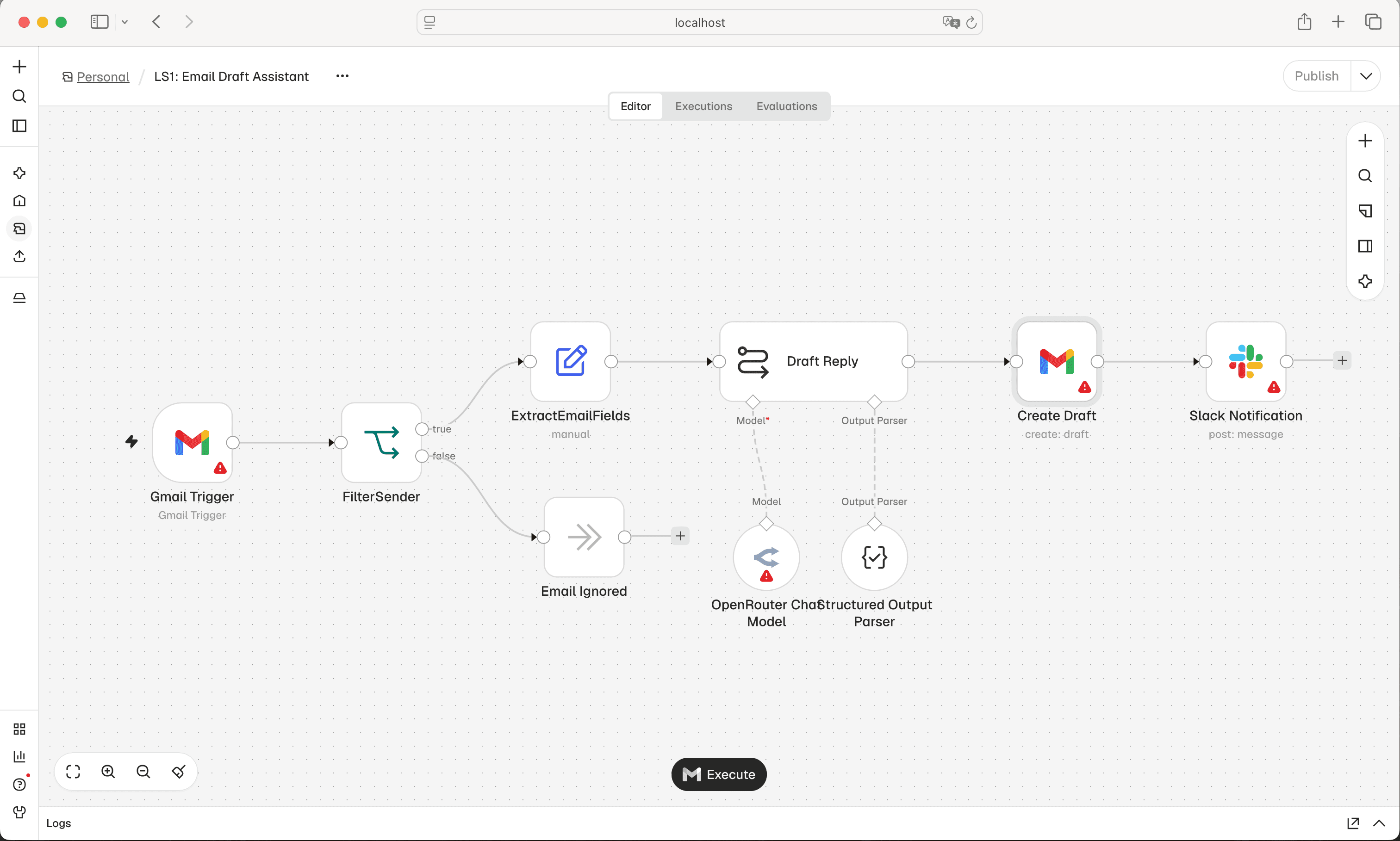
That includes real production usage in internal tools at companies like DHL and Huawei, as well as being a foundational part of the user experience for apps like n8n and Kestra.
We have already been collaborating with Burak behind the scenes for quite some time, and after years of maintaining Vue Flow under his own name (and his fair share of maintaining React Flow too), Burak and our team started discussing bringing Vue Flow under the xyflow umbrella.
What it means
The Vue Flow website has been overhauled and brought in line with our React Flow and Svelte Flow content. That means all our examples and guides are available across all our supported frameworks, making switching and onboarding between frameworks seamless.
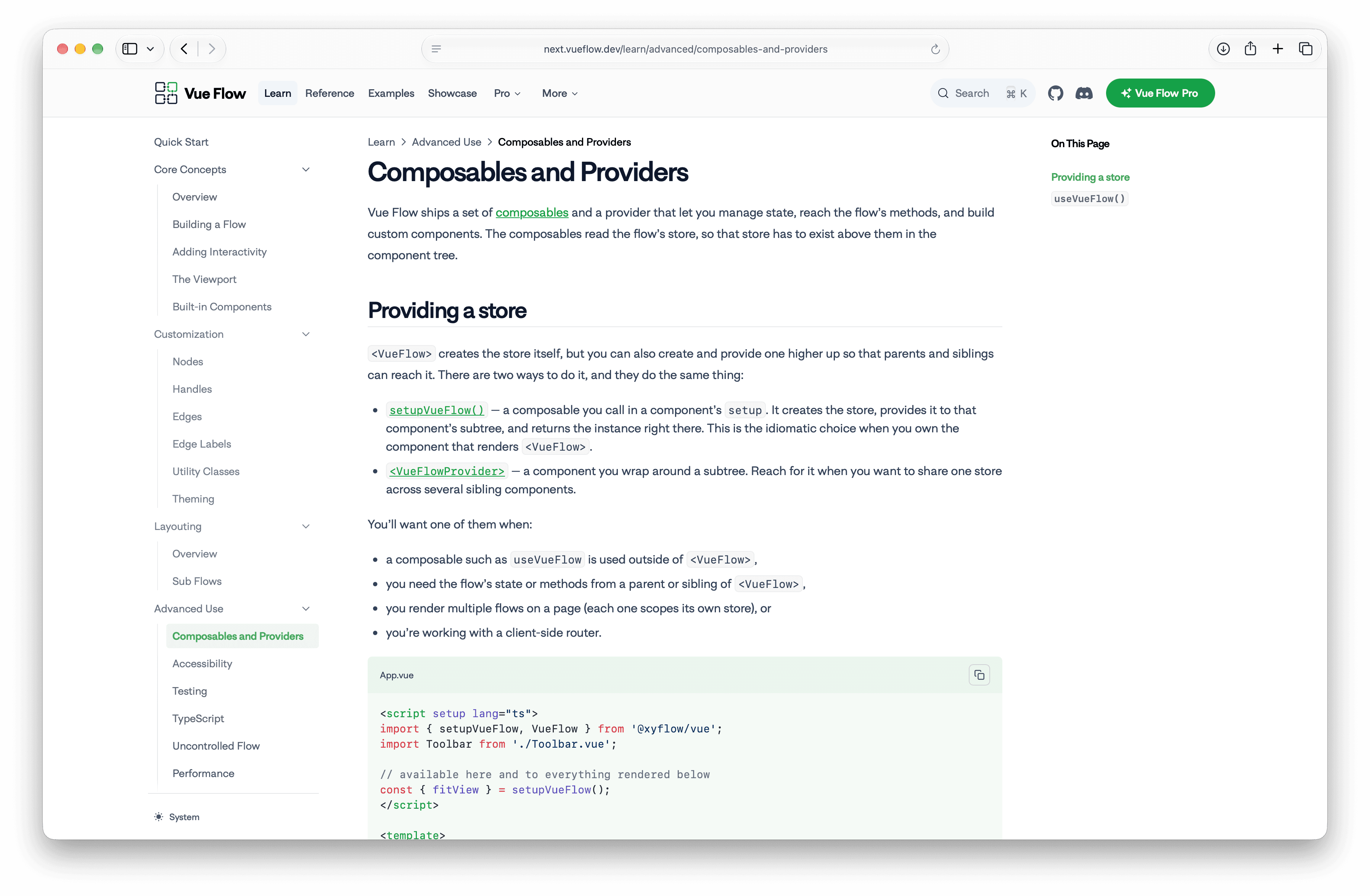
The Vue Flow codebase now lives in our xyflow monorepo but Burak will continue to lead its development. In addition, Burak will join us full time next year. We hope this step will encourage more organisations to adopt Vue Flow with confidence, knowing it has strong backing and ongoing development.
And lastly, it means it’s time for a new major release: Vue Flow 2!
Vue Flow 2
Vue Flow 2 brings the library in line with React Flow and Svelte Flow, while
keeping the idiomatic APIs that make Vue Flow feel natural to use for Vue
developers. The library and its separate background, controls, minimap, node-resizer,
and node-toolbar add-ons are now part of a single @xyflow/vue package.
Under the hood, we’ve reworked the internals to make use of our shared
@xyflow/system package. That means a common core for zooming, panning, dragging,
connections, edge paths, and measurement that should make maintenance and future
development easier.
The surface API has also been refactored to closer-align with our other libraries. We’ve aligned the node and edge models, accessor names, store shape, CSS variables, and DOM structure, which makes moving between the libraries much smoother.
While we think this alignment will make it easier for developers to work across different frameworks without having to relearn core concepts, it’s also important that each library leans into framework-specific strengths and idioms. To that end, much of the API will continue to feel familiar to Vue developers, and folks shouldn’t worry that we’re showing up to Reactify the codebase!
Expand the code editor in the example below to get a quick feel for the new changes.
We’ve also been paying close attention to performance, and we’re excited to say that Vue Flow 2 is faster than its predecessor across these tests. Here are some measurements we picked up during our testing:
| Test case | v1 | v2 | change |
|---|---|---|---|
| Mount 100 nodes | 55.5ms | 38.1ms | -31% |
| Mount 900 nodes | 458.9ms | 216.5ms | -53% |
| Drag 1 node of 100 | 3.8ms/fr | 3.6ms/fr | -5% |
| Drag 50 nodes of 100 | 9.0ms/fr | 6.8ms/fr | -25% |
| Drag 900 nodes of 900 | 137.6ms/fr | 62.5ms/fr | -55% |
These performance gains are largely down to a move to immutable nodes and edges.
This means Vue Flow no longer tracks in-place mutations of nodes and edges, and
instead relies on helpers in the useVueFlow store or immutable reassignments of
the entire node and edge collections.
In Vue Flow 1 you may have directly mutated a node to change its position or data:
const node = getNode('1');
node.position = { x: 10, y: 10 };
node.data.label = 'changed';
node.selected = true;

edge.animated = !edge.animated;
These updates will no longer trigger a re-render. In Vue Flow 2, you’ll instead
update through the store helpers, or reassign your v-model array immutably:
const { updateNode, updateNodeData, updateEdge, updateEdgeData, setNodes, setEdges } = useVueFlow();

updateNode('1', { position: { x: 10, y: 10 } });
updateNodeData('1', { label: 'changed' });
updateEdge('e1-2', { animated: true });

// or immutable reassignment of the bound array
nodes.value = nodes.value.map((n) => (n.id === '1' ? { ...n, selected: true } : n));
Importantly, the performance improvements scale with the size of the flow. That makes Vue Flow 2 an excellent choice to build large workflow builders and canvas applications alike.
Over to you
If you’re coming from Vue Flow 1, we’ve written a comprehensive migration guide to walk you (or your agent) through the upgrade steps. Otherwise, check out the quickstart guide to get up and running with Vue Flow 2.
We’d like to say a huge thank you to Burak for his work on Vue Flow over the years: we can’t wait to continue working with you on Vue Flow and beyond! And a big thanks also to the community that has built up around Vue Flow
If you or your company are building your next product with Vue Flow, please consider checking out Vue Flow Pro to unlock advanced guides and help keep the project sustainable.